5 Common Cycling Problems a Power Meter Solves
Posted on April 23, 2026
If you have spent any time riding a bike, you know your body can be a terrible liar.
Some days, you feel sluggish and heavy, yet you’re flying up your local climb. Other days, you feel like you are pushing WorldTour watts, only to look down at your bike computer and realize you are crawling into a brutal headwind. Relying solely on how you feel—or simply looking at your average speed—leaves a massive margin for error in your training.
That is exactly why the use of a power meter has become the gold standard for cyclists and triathletes of all levels. It measures your exact mechanical output (in watts or “W”) with absolute, undeniable precision. What does that actually mean for your daily ride?
Here are the five biggest training problems a cycling power meter instantly solves, helping you train with intention and unlock your true potential.

1. The “Junk Miles” Trap
The Problem: You struggle to stick to your intended training intensity.
You go out for an “easy recovery ride” but end up chasing a friend up a hill. Then, you go out for a “hard interval day” but your legs are too fatigued to hit the right intensity. You end up spending all your time riding in the “grey zone”—moderately hard, but not hard enough to build high-end fitness, and not easy enough to actually recover.
The Solution: A power meter keeps you honest.
By establishing your training zones based on your Functional Threshold Power (FTP), you know exactly what wattage to hold to ensure your hard days are truly hard, and your easy days are truly easy.
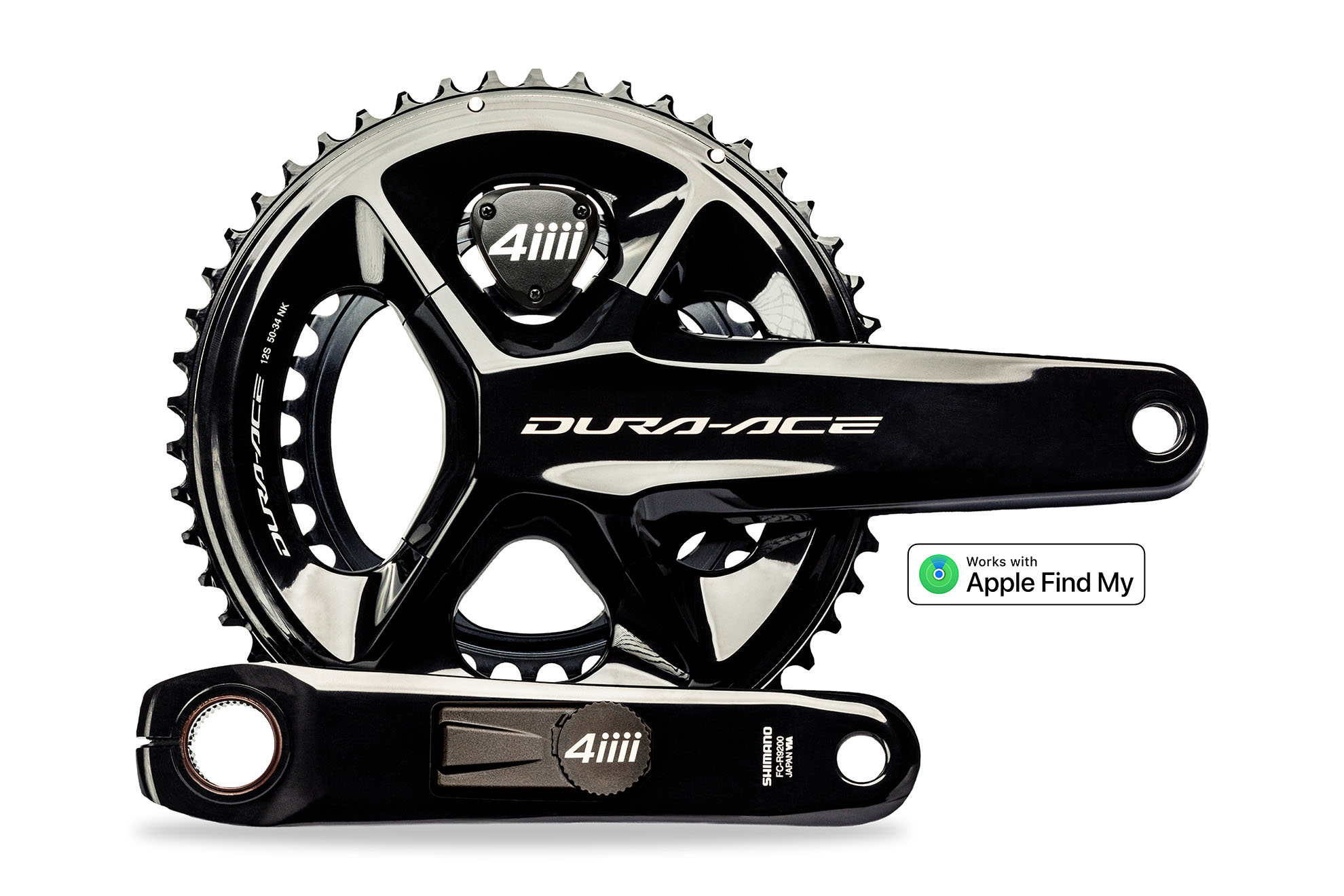
Even Jill Kintner, downhill racing legend and recent winner of the 2026 Pro Women’s Downhill at Sea Otter, relies on her 4iiii PRECISION 3+ Powermeter to nail her “30/30” intervals, which prepare her for the punchy efforts that her races require.

2. The Deception of External Conditions
The Problem: You can’t accurately judge your true effort based on speed alone.
Speed is a flawed metric. If you ride at 30 km/h with a tailwind, it feels effortless. If you ride at 30 km/h into a block headwind, you are suffering. If you’re only tracking your speed or distance, it’s impossible to accurately gauge the quality of your workout.
The Solution: Power is absolute.
200 watts is 200 watts, regardless of whether you are climbing a 10% gradient, fighting a crosswind, or cruising on a perfectly flat road. A major benefit of a power meter is getting a completely objective measure of your effort, entirely independent of external conditions.
You might feel like you’re inching along during the headwind section of a time-trial course or the bike portion of a triathlon, but the numbers don’t lie—and will keep you accountable to your targeted effort. That same wattage output will see you flying on the return leg of the course with a tailwind!

3. Blowing Up on the Big Climb
The Problem: You start long efforts too fast and run out of energy before the finish.
You hit the base of a massive climb or start the bike leg of a triathlon feeling incredibly fresh. You push the pace, adrenaline takes over, and halfway through, the piano drops on your back. You completely run out of gas because you went out too hard.
The Solution: Perfect pacing.
A power meter acts as your personal dashboard, telling you exactly what output your body can sustain over a specific duration. By sticking to your target watts, you can pace your efforts perfectly, ensuring you cross the finish line—or crest the summit—with nothing left in the tank, but without blowing up early.
Pro off-road racer, Hannah Otto, recently claimed the FKT (fastest known time) up the Mauna Kea climb in Hawaii, relying heavily on her 4iiii PRECISION 3+ Powermeter to pace the multi-hour effort.

4. The Guesswork of Fueling
The Problem: You have no accurate way to measure how many calories you are burning during a ride.
“Bonking” (completely depleting your glycogen stores) is the worst feeling in cycling. Trying to calculate how many calories you are burning based on heart rate or perceived exertion is largely a guessing game, making it incredibly difficult to know how much you should be eating and drinking on long rides.
The Solution: A power meter measures mechanical work in kilojoules (kJ).
Because of the way the human body converts energy, the mechanical work you do in kilojoules is roughly equal to the calories you burn. If your head unit says you burned 1,000 kJ, you know you need to replace roughly 1,000 calories. It completely removes the guesswork from your nutrition strategy.
2025 Life Time Grand Prix Men’s Overall Winner and 4iiii athlete, Cam Jones, is a rider at the forefront of pushing the limits of how many calories an athlete can fuel themselves with on big days out. He’s able to accurately track his needs in large part due to his 4iiii power meter.

5. “Am I Actually Getting Faster?”
The Problem: You lack an objective way to track if your fitness is actually improving.
Progress in endurance sports is notoriously slow and difficult to measure day-to-day. Without objective data, plateaus can feel incredibly frustrating.
The Solution: Quantifiable progress.
With a power meter, your growth is laid out in absolute numbers. When you can push 250 watts at the same heart rate that used to only yield 230 watts, you have tangible, undeniable proof of your improving efficiency. It provides the daily motivation you need to keep pushing and Power Forward.
The CUBE Factory Racing Team has been racking up some huge results the past two seasons, including two XCO World Championship titles in 2025. They rely on their 4iiii power meters to track their training with great detail, so they can succeed on race day!

Ready to start training with intention?
You don’t need to be a WorldTour pro to experience the benefits of a power meter. Whether you’re aiming for a new personal best, trying to keep up with the local group ride, or simply wanting to optimize your limited training time, adding a cycling power meter to your setup is the single best upgrade you can make to your bike.
Shop our full lineup of 4iiii cycling power meters today: 4iiii Power Meters