FTP in Cycling What It Is, Why It Matters & How to Calculate Yours
Posted by Andrew Davidson on August 12, 2026
Whether you’re talking numbers over a mid-ride coffee stop or scrolling through ride data on Strava, you’ve almost certainly heard the term FTP. It’s one of the more common three-letter acronyms thrown around in the cycling world, often used as a badge of honour, and a reference to how close or distant we deem ourselves from the level of the pros we watch racing Classics and Grand Tours.
Beyond the café banter, what actually is FTP, and why does every structured training program revolve around it? Let’s dive into it and explore how these three letters still act as one of the key building blocks of a quality cycling training program.

An FTP test is a daunting but essential exercise to set yourself up for quality training.
FTP – Defined
FTP stands for Functional Threshold Power, defined as the highest average power output, measured in watts, that a cyclist can sustain for approximately one hour. It marks the boundary between sustainable aerobic riding and rapid fatigue.
The concept of FTP and the commonly used 20-minute testing protocol that’s used to find that value were both developed by Dr. Andrew Coggan, co-author of “Training and Racing with a Power Meter.”
FTP – Why It Matters
When we explain the value of power meters for cycling training, we often use a simple analogy: You wouldn’t just walk into a gym, load up a barbell, and start doing squats. You’d want a thoughtful, measured approach to how much weight you can handle and how many repetitions to perform to achieve your goals. You’d also want to record the weights you lifted for future workouts so you could track your strength gains over time.

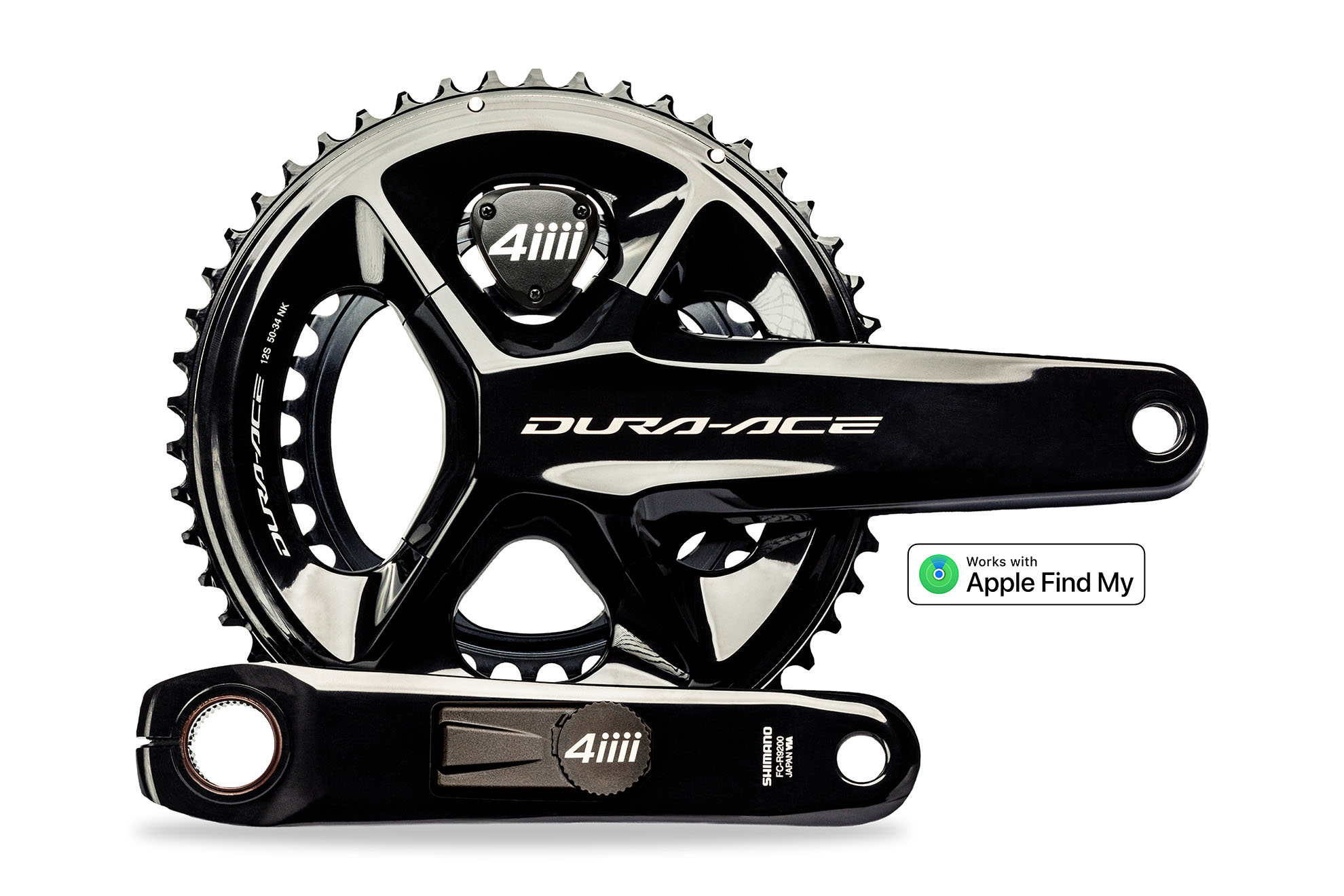
A power meter is a key tool for testing your FTP and guiding your workouts once you know your power zones.
In cycling, power meters give you that exact same control, allowing you to measure your effort in real time and follow prescribed workouts to maximize your training. Here are a few key reasons why knowing your FTP matters:
Fitness Baseline: It establishes a measurable starting point to structure your entire training block.
Training Zones: Your FTP sets personalized power zones, ensuring you train at the exact intensity required for specific adaptations. Typically, a 7 Zone framework is used (as developed by Andrew Coggan), which breaks down into:
The 7 Coggan Training Zones
| Name | % of FTP | Purpose | ||
|---|---|---|---|---|
| 1 | Active Recovery | < 55% | Easy spinning, warm-ups, and recovery | |
| 2 | Endurance | 56% - 75% | Building aerobic base & fat metabolism | |
| 3 | Tempo | 76% - 90% | Aerobic efficiency for long rides | |
| 4 | Lactate Threshold | 91% - 105% | Increasing sustainable race pace | |
| 5 | VO2 Max | 106% - 120% | Expanding aerobic capacity & oxygen uptake | |
| 6 | Anaerobic Capacity | > 121% | Short, high-intensity hard efforts | |
| 7 | Neuromuscular Power | Max Effort | Sprinting and explosive surges |
Tracking Progress: Retesting your FTP every few months provides clear data on whether your fitness is improving.
W/kg (Watts per Kilogram): Dividing your FTP by your body weight in kilograms gives your W/kg (Watts per Kilogram), allowing you to compare relative fitness across riders of different sizes.

Retesting your FTP every few months provides clear data on whether your fitness is improving.
How To Calculate Your FTP
While modern training platforms like Trainer Road and Xert can now use AI to estimate your approximate FTP based on your hard efforts, there is still immense value in executing formal FTP tests. They require a specific focus and determination akin to a race effort, serving as a great mental and physical benchmark for competition or chasing a local KOM.
To calculate your FTP manually, you’ll complete a structured, maximal-effort test using a power meter or smart trainer, record your average power output, and apply a mathematical multiplier based on your chosen testing protocol.
It is worth noting that if you choose to test outdoors rather than on an indoor trainer, you should find a stretch of road that allows you to put out your best effort without interruptions like traffic lights, stop signs, or downhill sections. The ideal terrain is a sustained climb or a long, straight road.

A stationary trainer with a power-meter-equipped bike, or a standalone smart trainer, are two great options for performing an FTP test.
4 Popular FTP Testing Protocols:
The 20-Minute Test (Most Popular): Ride at your maximum sustainable effort for 20 minutes after a thorough warm-up. Take your average power for those 20 minutes and multiply it by 0.95.
The Ramp Test (Shorter & Less Mentally Taxing): Progressively increase your wattage each minute until you can no longer turn the pedals. Take 75% of your best 1-minute power achieved during the test.
The 2 x 8-Minute Test: Perform two all-out 8-minute efforts separated by 10 minutes of easy recovery in between. Average the power data from both efforts and multiply by 0.90.
The 60-Minute Test (Gold Standard): Ride flat-out for a full 60 minutes. Your exact average power output for this duration is your direct FTP.
Step-by-Step for the 20-Minute Test
-
Warm Up (20 min): Begin with 3 × 1-minute high-cadence spin-ups (110+ RPM), taking 1 minute of easy recovery between efforts. Ride easy for 5 minutes, then execute a 5-minute all-out effort—start strong, but pace yourself to ensure you complete the full 5 minutes. Finish with 10 minutes of light, easy pedaling before kicking off your main test effort.
-
Pace the Effort: Start the 20-minute timer. Avoid starting too hard in the first 5 minutes. Aim to hold a smooth, max-sustainable output where your power line remains flat rather than spiking up and down.
-
Calculate the Final Number: Export your file to your cycling computer or training app. Take your average watts for those 20 minutes, and multiply by 0.95 (e.g., if you averaged 240 watts, 240 × 0.95 = 228 watts FTP).
-
Set Your Training Zones: Input your new wattage into training apps or devices to calculate your precise personalized training zones.

Comparing FTP numbers with your riding buddies and/or contrasting them with the pros is good entertainment, but nothing more.
Cyclists love to compare FTP figures at the café, but how your numbers compare to those of another rider isn’t the whole picture. Your FTP is just for you. For example, having the highest FTP won’t automatically win you a race. While the rider with the highest power-to-weight ratio will have the clear advantage on a steep climb, even on a flat time trial, factors like aerodynamics, strategy, and pacing play a massive role in who takes the win. Still, as long as cycling has data, FTP remains the go-to benchmark, so comparisons will always be made.
Training to Increase FTP
Once you’ve established your baseline FTP, the next step is choosing a training structure if your goal is to build on that power over time. Platforms like JOIN, TrainerRoad, and Zwift offer structured, pre-built training plans, or you can enlist a cycling coach to design a program tailored specifically to your goals.
With consistent training, it’s best practice to retest your FTP every 4 to 8 weeks. That way, as your fitness adapts, your training zones and workouts will update to reflect those gains—keeping you challenged and on the path to continuous improvement.
To provide a complete perspective, it is worth noting that while FTP remains an essential tool for setting training zones and tracking overall fitness, sports scientists and coaches no longer view it as the sole predictor of real-world race performance.
Why Perspectives Have Shifted
Ignores Durability: Races are rarely won on fresh legs. A high FTP doesn’t measure how much power you can produce after expending 2,000 to 3,000 kilojoules of energy mid-ride.
Alternative Metrics: Coaches increasingly analyze metrics like Critical Power (CP), W’ (anaerobic work capacity), and Lactate Thresholds (LT2) for higher precision.

A high FTP doesn’t guarantee success in competition, but it is still a key building block for your ongoing training.
Why FTP is Still Essential
Simple Benchmarking: Provides a straightforward, repeatable metric to track your fitness gains year over year.
Anchors Training Zones: Defines precise power targets so you know exactly when you are working above or below threshold.
Pacing Guide: Serves as a reliable, objective guide for pacing steady-state efforts like time trials and long mountain passes.
Frequently Asked Questions (FAQ)
What is a good FTP for a beginner cyclist?
For beginners, a typical FTP often ranges between 1.5 to 2.5 W/kg (watts per kilogram). Intermediate riders usually range between 2.5 and 3.5 W/kg, while advanced amateur racers often exceed 4.0 W/kg.
Can I measure my FTP without a power meter?
While platforms like Zwift or Strava can estimate power using speed, gradient, and weight (virtual power), an accurate power meter, such as a 4iiii PRECISION 3+, is required for reliable, repeatable FTP data.
How often should I re-test my FTP?
It is recommended to re-test your FTP every 4 to 8 weeks during a structured training block, or after returning from a significant break from riding.
Why is 95% of a 20-minute effort used to estimate FTP? Because most cyclists cannot hold a true 100% all-out 1-hour effort without pacing errors or mental fatigue, holding a maximal effort for 20 minutes and taking 95% (0.95) closely correlates to a true 60-minute anaerobic threshold effort.
Summary
Your FTP (Functional Threshold Power) represents the highest average power output you can sustain for approximately one hour, serving as a vital baseline for structured training and performance tracking. It also defines your personalized training zones to optimize your workouts and support continuous improvement. When it comes to testing, you can pick your poison, as there are several protocols to choose from, with the most common being a 20-minute effort multiplied by 0.95. While it’s fun to boast about your (slightly exaggerated) FTP number to your group ride buddies, it should be thought of primarily as a personal benchmark for steady-state efforts rather than an absolute predictor of race success.
Despite newer physiological metrics gaining traction, FTP remains a highly practical and repeatable tool for measuring fitness gains over time and guiding daily training intensity. It will also keep you humble when you compare your numbers to world-beaters like Tadej Pogačar and Magdeleine Vallières Mill!
Ready to stop guessing and start training with precision? Explore 4iiii Power Meters to find the exact setup you need to calculate your FTP and unlock your true potential.