A Dutchman and The Tour Divide An Interview with Laurens ten Dam
Posted on June 26, 2026
Laurens ten Dam, former Tour de France top-10 GC finisher, has just claimed second place in his second attempt at the Tour Divide—the legendary, ultra-distance bikepacking race that traces the 4,418 km Great Divide Mountain Bike Route from Banff, Canada, to the U.S.–Mexico border. Starting right in the backyard of 4iiii headquarters in Banff, Alberta, the race features no entry fees, prize money, or official checkpoints, meaning the clock runs non-stop from the grand départ until a rider finishes. It’s a gruelling test that usually takes two to three weeks, though significantly less if you operate at the pointy end of the race, which Laurens typically does. This year, 231 international adventurers set out to piece together dirt and gravel roads, jeep trails, and remote singletrack across Alberta, British Columbia, Montana, Idaho, Wyoming, Colorado, and finally New Mexico. At 45 years old, the vastly experienced ex-WorldTour pro covered the epic parcours in just 13 days, 7 hours, and 41 minutes, crossing the line at Antelope Wells, New Mexico, behind only the winner, Victor Bosoni of France.

Laurens' one previous Tour Divide participation, in 2024, a fifteen-day affair.
The Dutchman, who retired from the pro peloton in 2019, seems to be even busier in his “retirement” than he was during his traditional racing career. Since pinning on his last WorldTour number, he has successfully tackled some of the world’s premier gravel and bikepacking events, including a second-place finish at Unbound Gravel in 2021, a victory at Transcordilleras in 2024, and a recent podium at the Italy Divide. When he’s not logging time in the saddle or catching a few hours of sleep in a field, mid-race, he can be found behind the mic of his popular podcast, Live Slow, Ride Fast, or working with the wildly talented Dutch women’s national road team as the head coach. He’s also a husband and father of two, and a dedicated baseball dad who spends plenty of time at the ball diamond cheering on his kids.
Just before he headed to Banff for his record-breaking ride, we were thrilled to welcome him to the 4iiii headquarters for a tour and a quick catch-up. Over a coffee, the multi-talented intrepid adventurer shared some insight on where his lifelong passion for riding began, the biggest lessons from thirty years of racing, and what drives him to keep pushing his limits.
Early Years
The spark for Laurens’ cycling journey was lit during the 1989 Tour de France by Gert-Jan Theunisse—the svelte, long-haired climber who became the last Dutchman to win up the iconic Alpe d’Huez while wearing the polka dot jersey. Laurens was staying at a French campground with his father, walking over to a neighbouring camper every afternoon to watch the race on a small black-and-white television. While the broadcast mostly focused on Greg LeMond and Laurent Fignon battling for yellow, Laurens’ father went crazy with excitement watching this distinct-looking Dutchman fly up the mountain. It was a fitting inspiration, as Laurens himself would later become known for soaring up mountain passes in the Grand Tours. Theunisse became Laurens’ first hero, earning a permanent spot on his bedroom wall with a poster showing the climber bloodied from a crash but refusing to quit. Laurens thought that pure grit was incredibly cool at the time, never imagining that twenty-two years later, a strikingly similar photo would be taken of him enduring the exact same position at the Tour de France.

Childhood hero and the last Dutchman to win on Alpe d'Huez, Gert-Jan Theunisse (top). Laurens (bottom left) would unintentionally mimic him 22 years later, with his own unforgettable 'wounded warrior' Tour de France imagery. Both riders finished the race.
Like many kids growing up in the Netherlands, cycling was a foundational family affair. At eleven years old, Laurens split the cost of his first real bike 50/50 which kicked off a tradition of bike holidays and camping trips that left him with wonderful memories. His father was a teacher who enjoyed six weeks of summer holiday, and he would always take Laurens out on the bike for three or four days, aiming to cover 400 kilometres. These early adventures laid the groundwork for a life spent testing endurance limits, though his formal entry into competitive racing hit a minor speed bump. During his very first practice session at the local cycling club, a strict youth regulation required him to strip the gears off his brand-new bike. Flatly refusing to compromise on the machine he had worked so hard to buy, Laurens chose to wait five years until the rules allowed gears again, finally returning to the exact same club at age fifteen to launch his road career.

Snapshots from the early days of Laurens' lengthy cycling career.
Pro Career
Laurens’ professional career began in 2004 when he made the jump from the Rabobank development squad. In that era, power data had not yet become the accessible, go-to training tool it is now; riders tracked their data with just a heart rate monitor. Driven to look closer at his performance, Laurens took matters into his own hands in 2007 while racing for the Unibet team, spending about €2,500 of his own money to buy a Shimano crank with an SRM system on it to use for training. The power numbers looked good as he steadily built up his pro resume and established himself as one of the best climbers in the peloton. His breakthrough year came in 2008 during his first Tour de France, where he finished 22nd on GC and provided crucial help to Denis Menchov, who claimed third place overall. The momentum continued into 2009, when he served as Menchov’s last domestique in the mountains to help him win the Giro d’Italia, leaving Laurens with incredibly fond memories. As he featured more and more at the front end of mountain stages, Lance Armstrong even gave him his abbreviated nickname, calling out, “You’re still up here helping your man, LTD!”
These years marked the pinnacle of his personal results, highlighted by an 8th-place finish at the 2012 Vuelta a España, followed by 13th and 9th place overall finishes in the 2013 and 2014 editions of the Tour de France. From 2017 onward, Laurens would serve as a key domestique for Tom Dumoulin, helping him win the Giro d’Italia and finish second overall at the Tour de France. Even after his professional road career came to an end, he still had the grit to take on five consecutive editions of Unbound Gravel from 2021 to 2025. With that endless drive to keep pushing his limits, Laurens essentially maintained his status as a pro athlete for more than twenty years.

Laurens’ career featured several highs, in terms of personal accomplishments and those as a key domestique for star riders like Tom Dumoulin (left), who won the 2017 Giro d’Italia.
Current Adventures
When he retired from the pro peloton, Laurens made a defining promise to himself: from that moment on, every project he pursued had to stem from genuine enthusiasm rather than obligation. It was this focus on passion over income that made him jump at the offer to become the head coach for the Dutch women’s national team—a role he was simply incredibly excited to take on. This philosophy has beautifully guided his post-tour life, allowing him to channel his energy into coaching, podcasting, creating a cycling clothing line, and producing authentic media. For the Tour Divide, the motivation isn’t a financial return; rather, it is a deep-seated desire to ride the trail from Canada to Mexico as fast as possible to truly test his limits. Laurens and his friends plan to capture this adventure on film through their podcast company, Live Slow, Ride Fast. Though it remains a tight-knit operation of eight employees, the focus is entirely on creating meaningful projects with a great atmosphere. For Laurens, the film is driven purely by the desire to tell a great story, a vision fully shared by the two camera operators joining him. That collective passion and creative freedom are the true keys to keeping all of his ambitious projects thriving.

Coaching the Dutch women’s national road team, co-hosting the Live Slow, Ride Fast podcast, among other endeavours… his post-WorldTour career is not lacking for new adventures.
When it comes to preparing for ultra-distance bikepacking races or single-day events like Unbound Gravel, Laurens’ training volume remains staggering compared to his WorldTour days. For the first four to five years after stepping away from road racing, he still logged roughly 27,000 to 28,000 kilometres a year, barely backing down from his pro baseline, which perfectly explains his incredible run of four top-5 finishes at Unbound during that period. Since 2025, however, his kilometres have dropped slightly due to his coaching commitments with the Dutch national team and his growing kids playing high-level baseball. Yet, by anyone else’s standards, his scaled-back training still sits at an impressive 20,000 kilometres a season, a massive volume for someone managing so many off-bike endeavours. Knowing he could no longer maintain his peak monthly pro mileage, he intentionally focused on ramping up his distance ahead of the Tour Divide, knowing it was his ultimate target for the year.
Reflecting on the lessons learned from a half-decade of gravel racing and his first attempt at the Tour Divide, Laurens openly admits the learning curve is steep. During his debut in 2024, he went in too naive and failed to match his own expectations. He had tried to match Lachlan Morton’s 12.5-day schedule, reasoning that because they shared similar pro climbing backgrounds, he could match the pace. Instead, things went sideways: his equipment faltered, the cold took a toll, and his body became puffy and swollen. He spent 15 days and 6 minutes suffering on the trail, a gruelling effort that cost him 7 kilograms in just two weeks and left him feeling not quite himself at home for three months afterward. At the time, his immediate reaction was that he would never attempt it again. While it made sense to look to Morton as a benchmark given their similar racing profiles, Laurens learned the hard way that an ultra-distance strategy cannot simply be copied from one rider to another.
It took a full year of perspective before Laurens could look back at his 2024 ride with genuine pride, a shift in mindset that eventually sparked the desire to tackle the route all over again. On his first attempt, he had been too focused on chasing Morton’s ghost, chasing the win, and trying to replicate others’ exact sleeping strategies rather than riding his own race. In an unsupported, unpredictable event like the Tour Divide, success requires absolute self-reliance. For his return, Laurens resolved to simply go with the flow and remain flexible. His strategy this time was to embrace the chaos and the inevitable suffering rather than chasing records. By focusing entirely on executing his best personal ride, he knew he could be at peace with the outcome, whether that meant a tenth-place finish or standing on the top step of the podium.

Laurens and his 2026 Tour Divide rig, plus a familiar face, at the 4iiii office.
The Tour Divide
Given the distinct nature of ultra-distance events, a rider’s effort must be strategically rationed over several days—or in the case of the Tour Divide, weeks—meaning the power data looks vastly different than that of a typical single-day race. From Laurens’ experience, the numbers on a multi-week trek are naturally conservative and not nearly as high as people might think. For reference, during his best power performance at the 2022 Unbound Gravel, where he placed fourth, Laurens threw down a massive solo effort early on followed by a heavy chase to rejoin the front, averaging roughly 290 watts with a 320-watt normalized power over 10 hours. In contrast, when he won the multi-day, 1,000-kilometre Transcordilleras in Colombia, he narrowly beat Canadian Rob Britton by just 45 minutes after executing a full time-trial effort for the final nine hours in the dark. Yet, due to high altitude, technical terrain that required hiking or pushing the bike, downhill coasting, and mounting fatigue, his average output for that entire race was only 150 to 160 watts. It taught him a vital lesson in pure efficiency: keeping momentum is everything. Laurens realized it is far better to steadily push 150 watts all day long than to ride at 170 watts but be forced to stop every four hours.

Laurens putting his WorldTour watts to use at the 2023 Transcordilleras bikepacking race.
One of the biggest factors, and most intriguing elements of strategy for a multi-week, self-supported outing like Tour Divide, is that of sleeping. Riders must constantly balance much needed physical recovery against absolute time efficiency, a lesson Laurens learned the hard way on his previous attempt. Back then, he pre-planned all his hotel stops to match the exact six-hour rest windows Lachlan Morton had used. However, he quickly realized that the immense comfort of a hotel room bred wasted time. He would find himself checking his phone, messaging his wife, and sending video updates back to his media team, turning a planned six-hour stop into a seven or eight-hour delay. While it is hard to blame anyone for lingering in comfort after endless hours in the saddle, time waits for no one. Laurens adapted his recovery plan. He experimented with shorter four to five-hour stops during an ultra-distance race around the Netherlands, including just a single hour of sleep on the final night and tested three-hour sleep windows at the Italy Divide. To guarantee absolute flexibility for his return to the Tour Divide, he packed a sleeping bag this time around, allowing him to sleep anywhere from store awnings to public restrooms. It was a tactical shift that paid off massively.
Just thinking about the physical and mental exertion of a two-week trek, with massive days in the saddle, confronting all of nature’s elements, and straddling the line of pushing on and completely cracking, one has to ask, why? For a rider who achieved massive success as a European road pro and now juggles multiple booming projects off the bike, the drive to keep lining up at such demanding events comes down to a powerful mental shift. Laurens traces this back to his very first three-day ultra-distance race, which he entered during the pandemic while simultaneously launching three new companies. He initially assumed the solo miles would give him three straight days to analyze his businesses, his employees, and his relationships. Instead, the moment he hit the start button on his bike computer, his mind cleared completely. For three days, his entire universe shrunk to simple, immediate survival: take the risks, beat the risks, and feel good about yourself once you finish.
It is a philosophy to live and ride by: embrace the moment and take the calculated risks that make you feel alive. By taking the hard-earned wisdom from his 2024 attempt and executing a masterclass in both physical and strategic efficiency, Laurens ultimately shaved nearly two full days off his finishing time.

The finishing times of the top-7 so far, at the 2026 Tour Divide.
Driven by Grit
From a young boy watching the Tour de France on a campground television to an elite athlete conquering the rugged terrain from Banff to the Mexican border, Laurens ten Dam’s journey has always been defined by an unyielding passion for the ride. Shaving nearly two days off his previous time and capturing second place at the Tour Divide isn’t just a testament to his massive engine—it’s proof of what happens when hard-earned wisdom meets pure, unfiltered grit. At 4iiii, we are incredibly proud to support athletes like Laurens who remind us all that the best stories aren’t just about the data we track, but the unforgettable adventures we live.
Follow Laurens ten Dam here
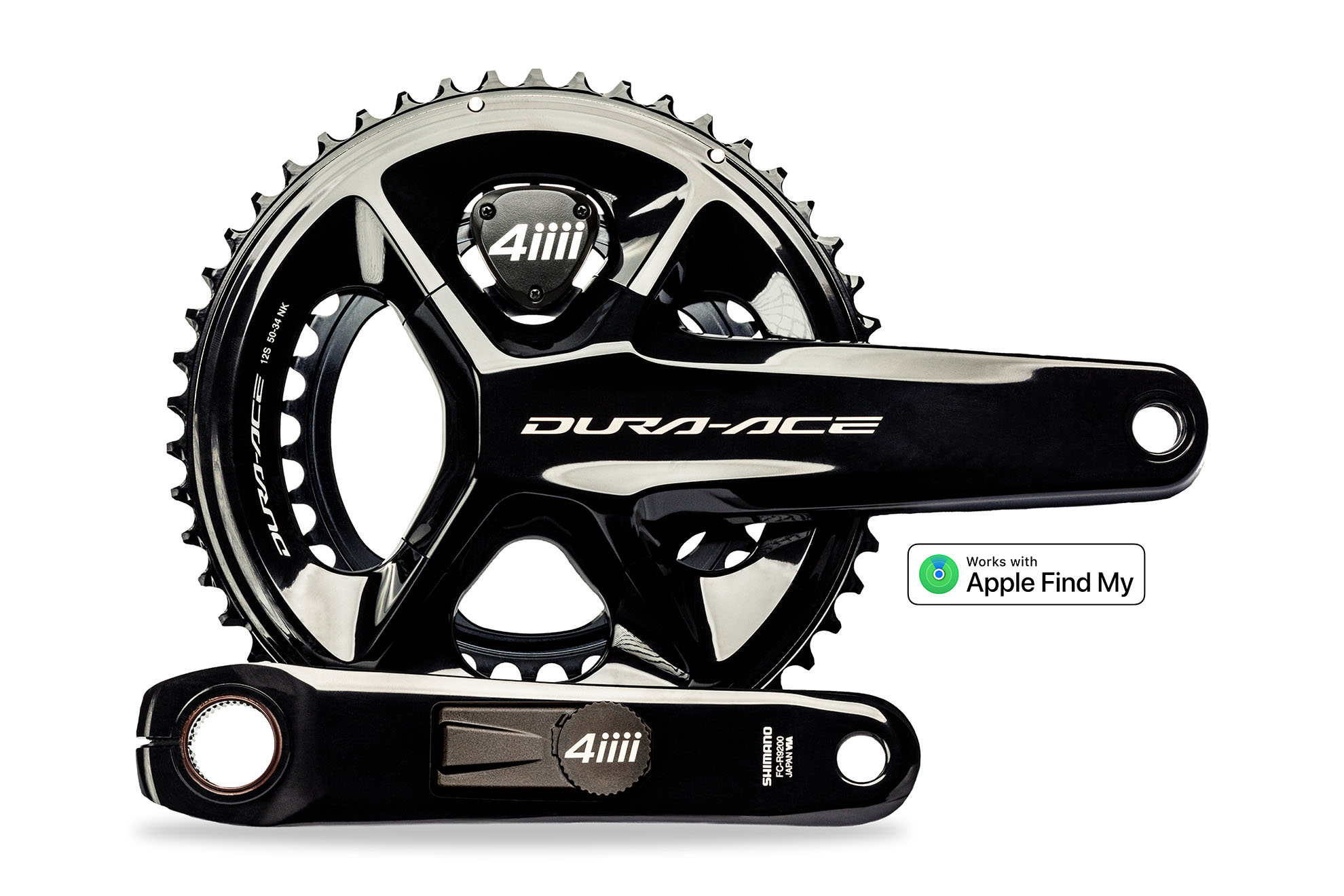
Learn more about the 4iiii PRECISION 3+ Powermeter that Laurens’ Tour Divide bike was equipped with here